What a pack actually does
A pack has four simultaneous jobs, and every technical decision is a trade-off between them: it protects the product until consumption, it transports and stacks efficiently, it communicates on the shelf and in the hand, and it closes the loop after use in a recycling circuit. A pack designed for only one of them fails at the other three.
Technologically, the plastic packaging industry splits into two worlds that barely touch: rigids, containers, closures, accessories and flexibles, film, sacks, pouches, mailers. The raw materials, the machines, the units of measurement and the quality criteria are different. Few companies cover both, because they are effectively two industries under one roof.
The materials and what each one is good at
Material choice is not made on price but on what the pack has to withstand: internal pressure, fat, solvent, UV, filling temperature, shelf life.
| Material | Strengths | Limits | Where we use it |
|---|---|---|---|
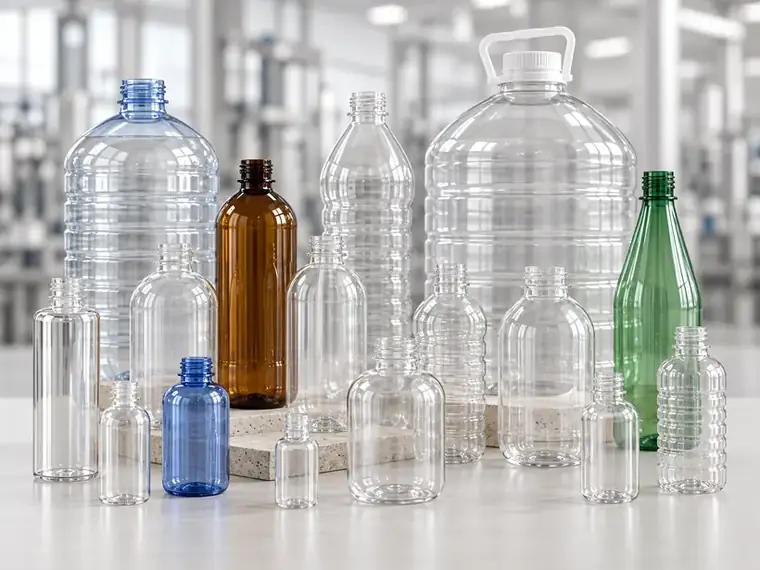
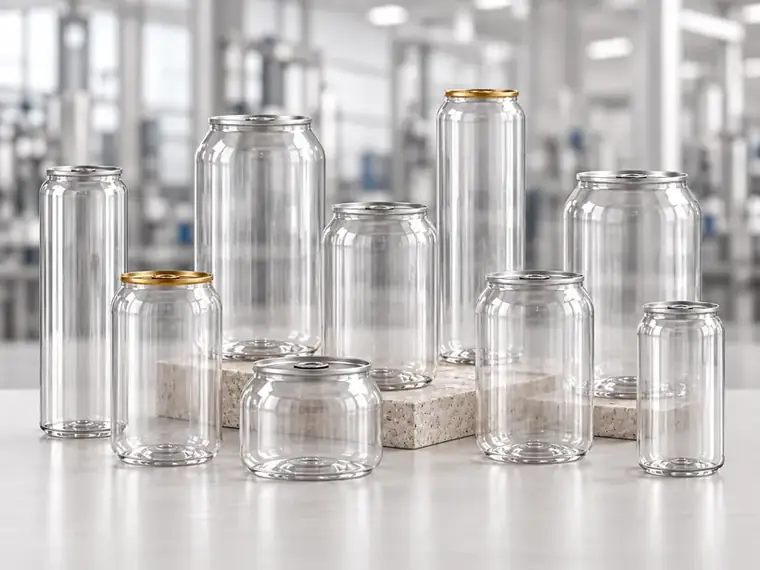
| PET | Clarity, rigidity, gas barrier, closed-loop recyclable | Moisture sensitive in processing; no hot fill without treatment | Bottles, cans, jars, preforms |
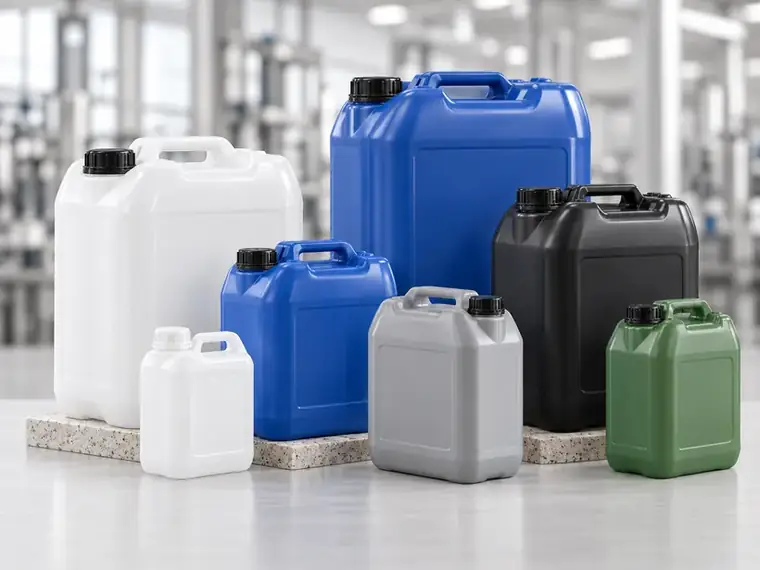
| HDPE | Chemical resistance, impact strength, weldable, opaque | Not transparent; poor aroma barrier | Bottles, jerrycans, handles |
| LDPE / LLDPE | Flexibility, low-temperature sealing, high elongation | Low stiffness; does not hold shape | Film, sacks, pouches, carrier bags, covers |
| PP | Living hinge, heat resistance, stiffness | Brittle at low temperatures | Caps, cups, cutlery, small bottles |
| rLDPE / rPET | Lower material footprint, same machines | Batch variability; limited colour range | ABA core, high-capacity sacks, technical film |
| PLA / PBAT | Industrially compostable, certifiable to EN 13432 | Needs composting infrastructure; higher cost | Biodegradable range: pouches, carrier bags, sacks |
The plastic packaging value chain
There are seven stages between the refinery and the recycling bin. An integrated manufacturer like ELECTRIC covers three of them, compounding, processing and decoration and directly influences, through design, what happens in the last one.
Conversion processes, compared
| Process | How it works | Good for | Typical volume |
|---|---|---|---|
| Injection moulding | Melt is injected under pressure into a multi-cavity mould and held until cool. | Solid parts with precise geometry: caps, handles, cups, cutlery, preforms. | Very high |
| ISBM | The injected preform is reheated, stretched axially by a rod and blown radially. | Clear containers with thin walls and pressure resistance. | High |
| EBM | An extruded parison is clamped between mould halves and inflated with air. | Opaque containers with integrated handles, jerrycans, complex shapes. | Medium–high |
| Blown film | Melt exits an annular die and is inflated into a bubble, then flattened. | Tubular or flat film, mono or coextruded, 6–150my. | By the tonne |
| Coextrusion | Several extruders feed the same die, forming distinct layers. | ABA/AB structures: recyclate in the core, different properties on each face. | By the tonne |
| Converting | The reel is sealed, cut, gusseted and equipped in line. | Sacks, pouches, carrier bags, mailers, covers, hoods. | Very high |
The technical parameters that decide the result
- Part weight. The most direct cost. One extra gram on a bottle is one tonne of material at a million pieces, which is why gravimetric dosing and parison wall control are not optional.
- Material distribution. It is not only how many grams the container has, but where they are. A well-distributed 20g bottle is stronger than a badly distributed 24g one.
- PET IV. Intrinsic viscosity decides whether the container withstands the internal pressure of a carbonated drink or only a still fill.
- Polyolefin MFI. Chosen by process: too high a flow makes the parison drop, too low a flow struggles to fill an injection mould.
- BUR and DDR in film. Together they set the balance between machine-direction and transverse strength. A “thin but strong” film is a correctly oriented film, not one with more material.
- Seal strength. In flexible packaging, the pack almost always fails at the seal. Temperature, pressure and dwell time matter more than film gauge.
- Cap opening torque. Too low and the product leaks; too high and the consumer cannot open it. It is measured, not estimated.
Necks and standard interfaces
The container neck is the interface between two industries: whoever makes the container and whoever makes the closure. That is why it is standardised. The neck choice decides which caps, pumps or triggers can be fitted and very often it decides the cost too.
| Interface | Where it appears | Notes |
|---|---|---|
| PCO 1881 | Carbonated and still drinks, PET | The short-neck standard; light cap, compatible with tethered systems. |
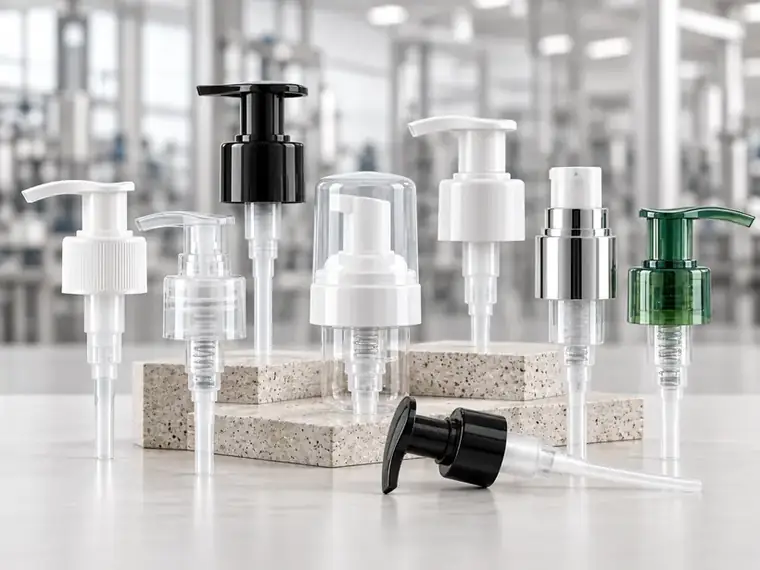
| 28/410 | Cosmetics, household chemicals | The most widespread interface for pumps and sprayers. |
| 24/410 | Small bottles, cosmetics | Same thread family, smaller diameter. |
| 38mm | Dairy, juices, wide-neck PET | Allows fast filling and products with particulates. |
| DIN 45 / DIN 61 | HDPE jerrycans | Robust threads for chemicals, lubricants and agriculture. |
| Ø202 / Ø211 SOT | PET cans with aluminium ends | The standard can interface; mechanically seamed Stay-On-Tab end. |
| Wide mouth 58–100mm | PET jars | For viscous products, powders and supplements. |


How to choose the right pack: eight questions
| No. | The question | Why it matters |
|---|---|---|
| 01 | What goes in it? | Fats, solvents and acidic products rule certain materials out immediately. |
| 02 | At what temperature is it filled? | Hot filling changes the material and geometry requirement completely. |
| 03 | How long is the shelf life? | Oxygen and moisture barrier are sized to shelf life. |
| 04 | How does it close? | The neck decides which cap, pump or trigger can be fitted. |
| 05 | How is it transported and stacked? | Top-load strength and pallet efficiency are direct cost. |
| 06 | How is it decorated? | Sleeve, self-adhesive or direct print, each needs a different surface and geometry. |
| 07 | What is the annual volume? | Volume decides cavitation, mould type and its amortisation. |
| 08 | What happens to it after use? | Mono-material, optically detectable colour and separable components, or the pack leaves the loop. |
The regulatory framework in short
- Food contact. Plastic materials and articles intended for food contact are regulated at European level, with composition, migration and per-batch declaration-of-compliance requirements.
- Packaging and packaging waste. The European direction is steadily towards less packaging, more recycled content and mandatory recyclability requirements for packaging placed on the market.
- Tethered caps. For beverage containers the cap must remain attached to the container after opening, which changed cap and neck geometry across the whole industry.
- EN 13432. The industrial composting standard: at least 90% biodegradation within 180 days, full disintegration within 12 weeks, no residue above 2mm and no microplastics. Our biodegradable range is built on it.
- Extended producer responsibility. Whoever places the packaging on the market pays for its collection and treatment and the fees are increasingly modulated by how recyclable the pack is.
An orientation summary. The exact requirements applicable to a product are established case by case, according to its end use and destination market.
Circular economy: recyclability starts at design
ELECTRIC has been a signatory of the Circular Plastics Alliance since 2019, a European initiative bringing together producers, converters, recyclers, brands and authorities around the target of using at least 10 million tonnes of recycled plastic a year in new products in Europe. The alliance was relaunched and strengthened by the European Commission in April 2026.
What that means in practice, in a factory
- The ABA structure allows a core with high recycled content and virgin skins that keep appearance and sealability. It is the most efficient way to raise recycled content without losing performance.
- Mono-material. A pack made from a single polymer is sorted and recycled; a pack of three inseparable materials ends up in energy recovery.
- Process scrap, blow moulding flash, film edge trim, set-up parts, is reground and returned into the process, in the proportion the product's end use allows.
- Energy. Almost 1.4 MW of photovoltaic capacity and around 460 kW of storage cover a significant share of our own production consumption.
Recyclability starts the moment you design the pack, not when it becomes waste.
Glossary of packaging industry terms
- PET
- Polyethylene terephthalate. A clear, rigid polyester with good gas barrier. The material of clear bottles, cans and jars.
- HDPE
- High-density polyethylene. Opaque, chemically resistant, easy to weld. The material of jerrycans and bottles for detergents and chemicals.
- LDPE / LLDPE
- Low-density polyethylene, branched or linear. The basis of blown film: flexible, seals at low temperature, stretches a long way before failing.
- PP
- Polypropylene. Rigid, heat resistant, with an excellent living hinge, which is why flip-top caps are PP.
- rPET / rLDPE
- Post-consumer recycled material. Used on its own or in a blend, in the proportion the product's end use and legislation allow.
- PLA / PBAT
- Industrially compostable polyesters. The basis of biodegradable ranges certified to EN 13432.
- ISBM
- Injection Stretch Blow Moulding, biaxial stretch-blow from a preform. The PET container process.
- EBM
- Extrusion Blow Moulding, blow moulding from an extruded parison. The polyethylene bottle and jerrycan process.
- Preform
- The injected semi-finished part, with a finished neck, from which the PET container is blown. The preform neck is already the bottle's final neck.
- Parison
- The tube of molten material extruded between the mould halves, to be inflated with air into the cavity.
- BUR
- Blow-Up Ratio, the ratio between bubble diameter and die diameter. It decides the balance of transverse strength.
- DDR
- Draw-Down Ratio, the stretch ratio in the machine direction. Together with BUR it sets the film's molecular orientation.
- IV
- Intrinsic Viscosity, an indicator of PET molecular chain length. Higher IV means a container more resistant to pressure.
- MFI
- Melt Flow Index, how easily the molten polymer flows. Chosen by process: injection needs a higher flow than extrusion blow moulding.
- ABA / AB
- Coextruded structures: ABA has identical skins and a different core; AB has two different layers.
- Pantalon / semipantalon
- Tube / tube slit on one side. The forms film leaves the extruder in, before converting.
- Sleeve slim
- A printed heat-shrink sleeve, applied to the container and shrunk 360° onto its shape.
- Masterbatch
- A pigment or additive concentrate, dosed into the base polymer at a low percentage.
- Gofrare / pliu
- The side or bottom gusset that lets a pack open into volume. On sacks it decides whether the bag fits the bin.
- Deflashing
- Removing the material left outside the cavity after blowing. Process scrap is reground and reused.
FAQ
What is the minimum order quantity?
It depends on the process. For film and converted packs the minimum is a reel or a pallet. For containers on an existing mould, one production run. For a new product with a new mould, the minimum is set together with mould amortisation, which is why we discuss the annual volume first, not the first order.
Can you produce on our mould?
Yes. We take the customer's mould, check it, put it on the machine and maintain it in our own tool room. The mould stays registered to the customer.
How long from idea to product?
Concept and 3D design are measured in days. The 3D-printed prototype, also in days. Mould manufacturing is the long stage and depends on complexity and cavitation. Having design, scanning, printing and CNC machining in the same department shortens the interval considerably.
How much recycled material can you put in a product?
Up to 100%, where the product's end use and the applicable rules allow. In high-capacity bin bags and construction film, recyclate is the main material. In food contact, the ratio is limited by legislation and by the availability of certified material.
What does design for recycling mean?
It means fewer different materials in the same pack, a label and cap compatible with the body at sorting, colours that do not defeat optical detection, and no combinations that cannot be separated. Recyclability is decided at design, not at the bin.
Do you print as well?
Yes, 1–4 colour flexo printing on flexible packaging, including plate making, and slim sleeve label application on rigid containers.