Three factories, one technological flow
ELECTRIC runs three factories in Focșani: rigid packaging by blow moulding, rigid packaging by injection moulding and flexible packaging. Around them sit the R&D department with the tool room, decoration and logistics. In practice a pack can travel the whole way from an idea to a delivered pallet without leaving the company.
factories
blown rigid · injected rigid · flexiblePET blow machines
7 semi-automatic + 10 automatic + 2 for jarsHDPE extrusion blow lines
from one cavity to 3 cavities with two stationsfilm extruders
3 coextruders (2×ABA, 1×AB) + 8 monobag-making lines
sacks, pouches, mailers, covers, carrier bagsinstalled photovoltaics
plus ~460 kW of storageR&D, design and the tool room
Our R&D department also houses the tool room, the two are deliberately in the same place, because most of the development time of a pack is lost in the handover between designer and toolmaker. Here the designer and the machinist talk in the same hall.
AI-assisted concept, since 2022
We have been using artificial-intelligence tools since 2022, in the concept phase: quickly generating and comparing shape variants, sanity-checking an idea before it consumes hours of CAD, preparing visuals for the conversation with the customer. AI does not design the mould, it shortens the road from brief to a direction worth modelling.
Design in SolidWorks
The container, the closure and the mould are modelled in SolidWorks: parametric geometry, draft angles, wall thicknesses, parting lines, cooling channels. The same model produces both the manufacturing drawing for the CNC and the file for the 3D printer.
3D scanning and prototyping
With the 3D scanner we can start from an existing object, a bottle the customer wants reproduced, an old part with no documentation, a mould that has to be rebuilt and turn it into a CAD model. With the 3D printer we produce the prototype you can hold, fill, squeeze and put on a shelf before the first piece of steel is cut.
Tool making: Hurco CNC and Knuth conventional machines
Precision machining runs on Hurco CNC machining centres. Next to them we deliberately keep conventional Knuth lathes and mills: for a repair, a cavity modification or a one-off spare, the conventional machine is often faster than programming a CNC. Together the two let us repair and modify moulds in hours, not weeks.
The advantage is not only being able to produce. The advantage is being able to modify, repair and develop what you produce, yourself.
| Stage | What we do | With |
|---|---|---|
| 01 | Concept and shape variants | AI tools (since 2022) + technical brief |
| 02 | Container and mould design | SolidWorks |
| 03 | Digitising an existing part | 3D scanner |
| 04 | Physical prototype | 3D printer |
| 05 | Mould and electrode machining | Hurco CNC centres |
| 06 | Repairs, modifications, spares | Knuth conventional lathes and mills |
| 07 | Machine trials and approval | Our own production lines |
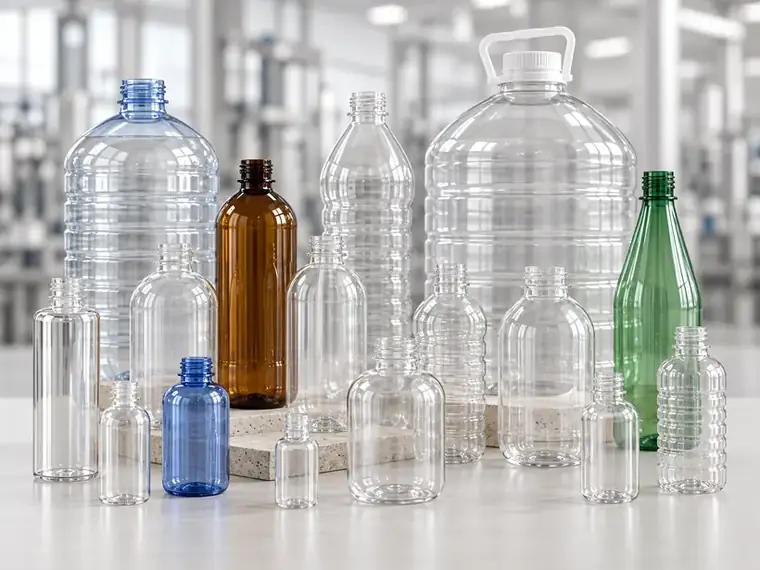
Rigid packaging by blow moulding: PET
PET containers are produced by biaxial stretch-blow moulding (ISBM) from an injected preform: the preform is heated in an infrared oven, placed in the mould, stretched axially by a rod and blown radially with high-pressure air. The molecular orientation achieved in both directions is what gives PET its clarity, mechanical strength and barrier.
The machine park
| Qty | Machine type | What it covers |
|---|---|---|
| 7 | Semi-automatic PET blow machines | Small and medium runs, special shapes, large volumes (up to 10L), new launches and trial batches. These are the machines that make an order of a few tens of thousands viable. |
| 10 | Automatic PET blow machines, 2 / 3 / 4 cavities | Series production. The number of cavities is chosen according to order volume and bottle geometry; preform feeding, transfer and discharge are automatic. |
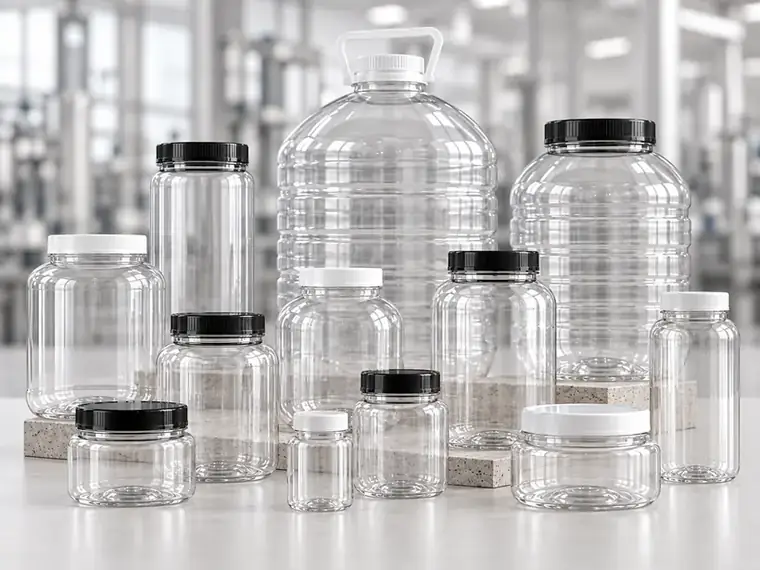
| 2 | Automatic jar machines | Dedicated to wide-mouth containers, PET jars for food, cosmetics and supplements, where the large neck requires different blowing kinematics. |
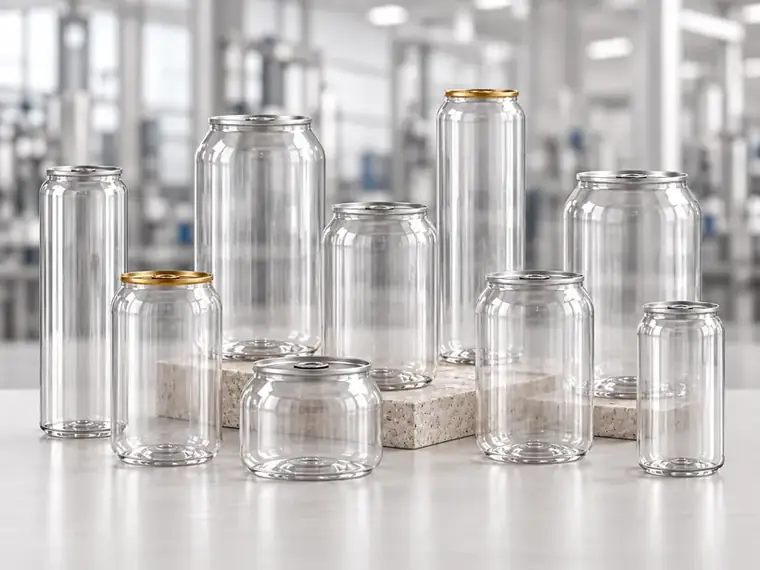
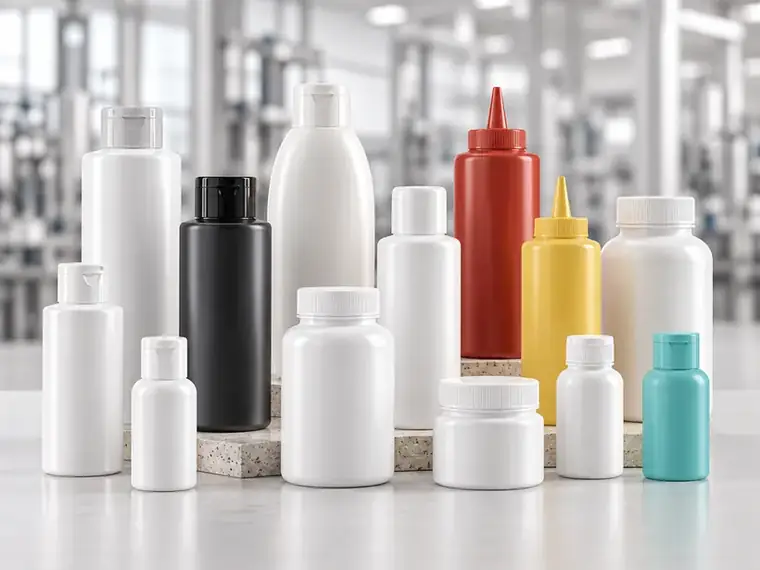
This factory produces PET bottles, PET cans with aluminium ends and PET jars. Installed capacity exceeds 28.2 million PET containers a month, in volumes from 0.3 to 10 litres.
Extrusion blow moulding: HDPE bottles and jerrycans
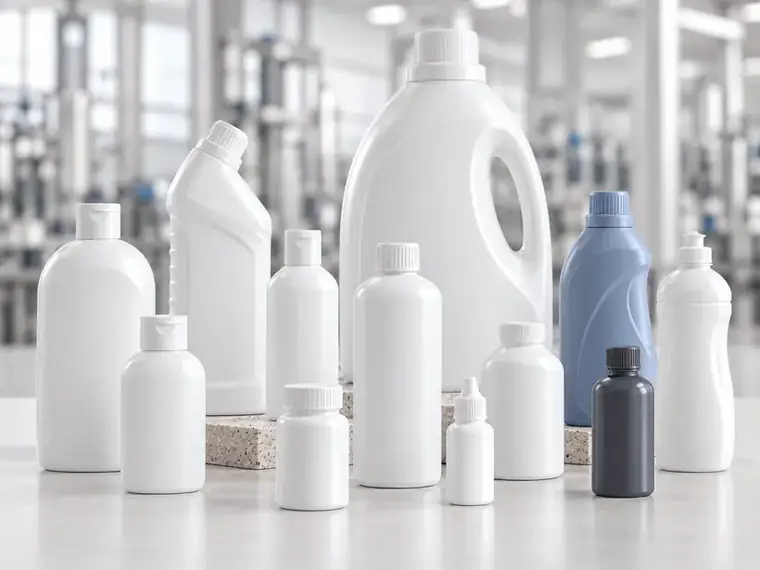
Here we do not start from a preform but straight from the granule. The extruder melts the material and forms a parison, a tube of molten material descending between the two mould halves. The mould closes, welds the bottom, and air inflates the parison against the cavity walls. This is the technology with which ELECTRIC entered bottle production, in 1996.
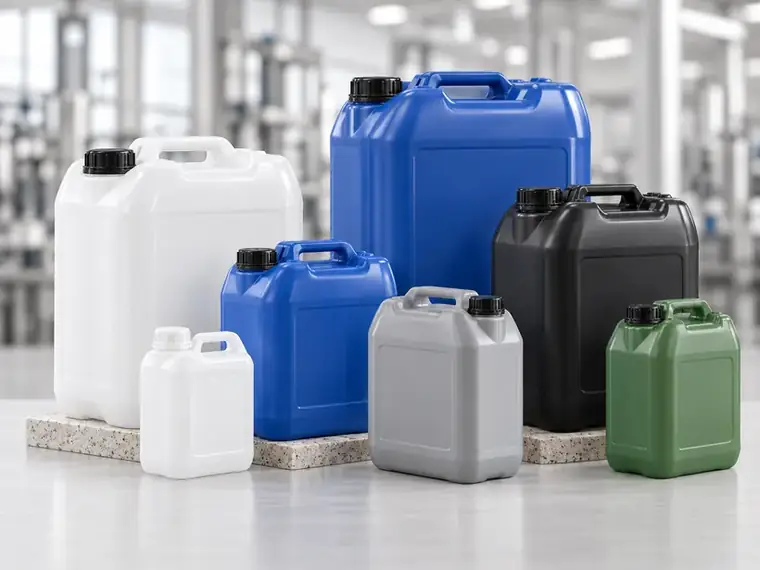
We have 12 extrusion blow lines for HDPE bottles and jerrycans, from one cavity up to 3 cavities with two stations. The two-station configuration effectively doubles a mould's output: while one set of containers is being blown and cooled, the die head is already forming the parison for the next.
- Parison wall control puts material where the container needs it, corners, shoulders, the handle area and takes grams out of where it does not.
- Deflashing is done in line, and process scrap is reground and returned into the process, in the proportion the product's end use allows.
- Leak testing runs on the line: every container that will not hold pressure is rejected.
Gravimetric dosing on every machine
All PET blow machines, all HDPE extrusion blow lines and all film extruders have gravimetric dosing units. The difference from volumetric dosing is simple and its consequences are large: a gravimetric doser weighs every component of the blend, polymer, colour masterbatch, additive, recyclate, instead of estimating a volume.
- Consistent colour from the first to the last pallet of an order, even when the bulk density of the granule changes between batches.
- Consistent part weight: extra grams in a bottle are invisible but they are paid for, at one million pieces, one gram is one tonne of material.
- Controlled and documentable recyclate ratio, which matters both technically and for the recycled-content declaration.
- Consumption tracked in real time: the doser reports how many kilos actually went into each order.
Rigid packaging by injection moulding
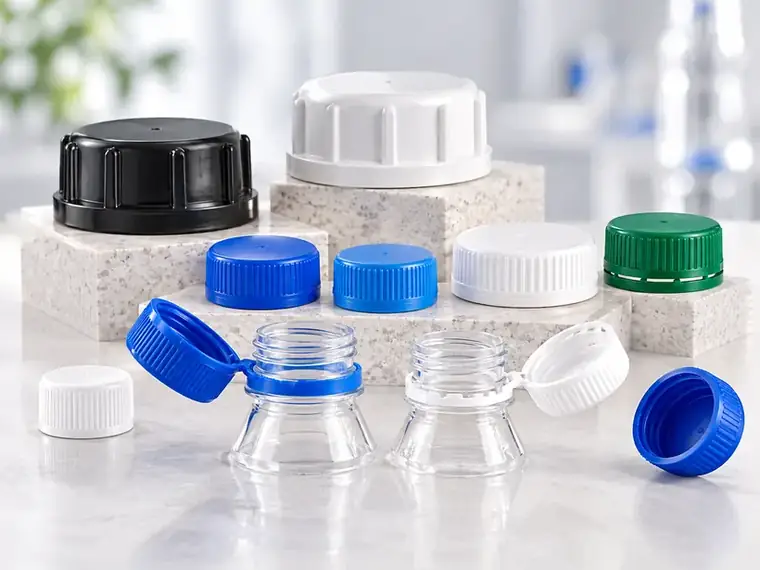
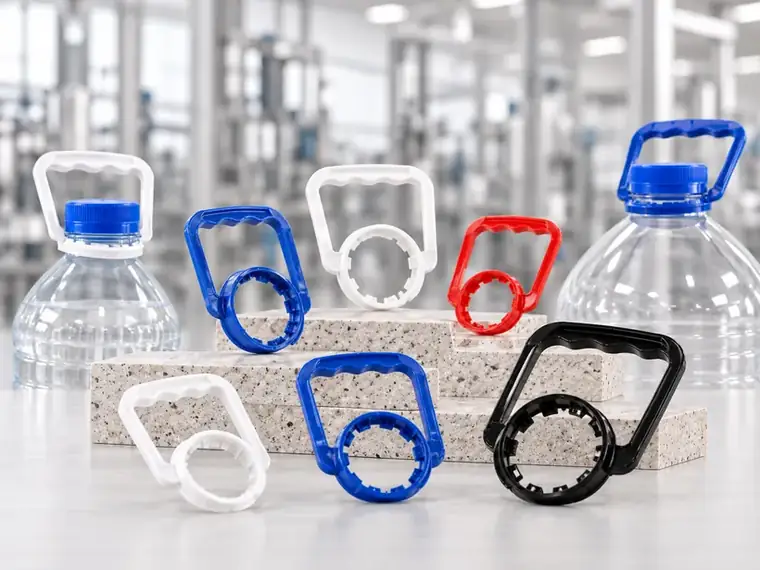
Injection moulding is the technology ELECTRIC started with in 1990, and the one that today produces the company's highest unit volumes: over 88 million caps, closures and handles a month. Molten material is injected under pressure into a multi-cavity mould, held under packing pressure while the part shrinks, then cooled and ejected.
What we injection-mould
| Group | Product | Technical notes |
|---|---|---|
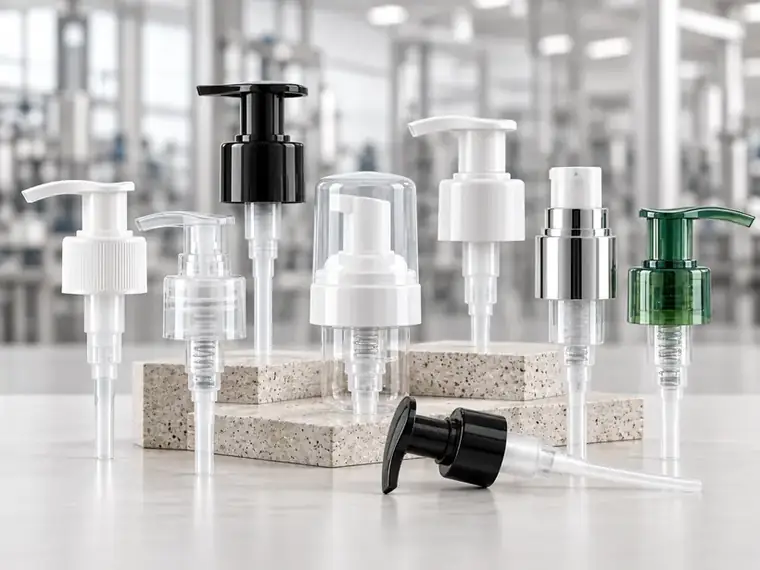
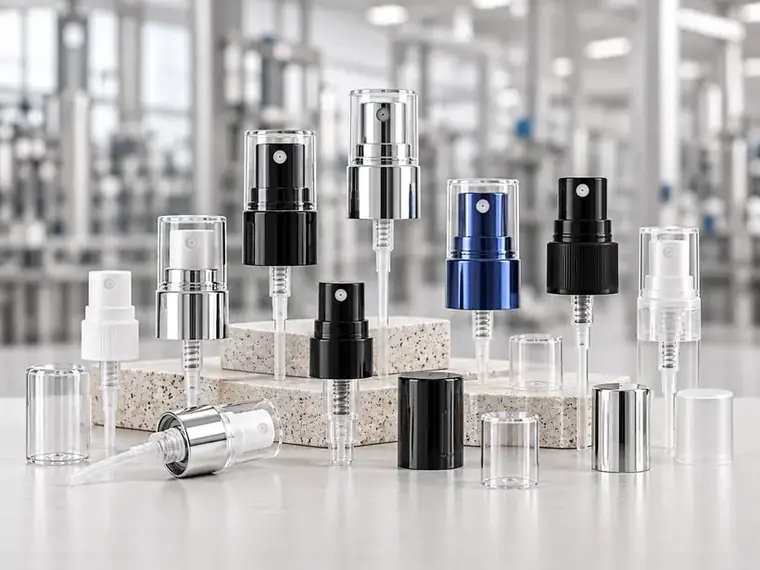
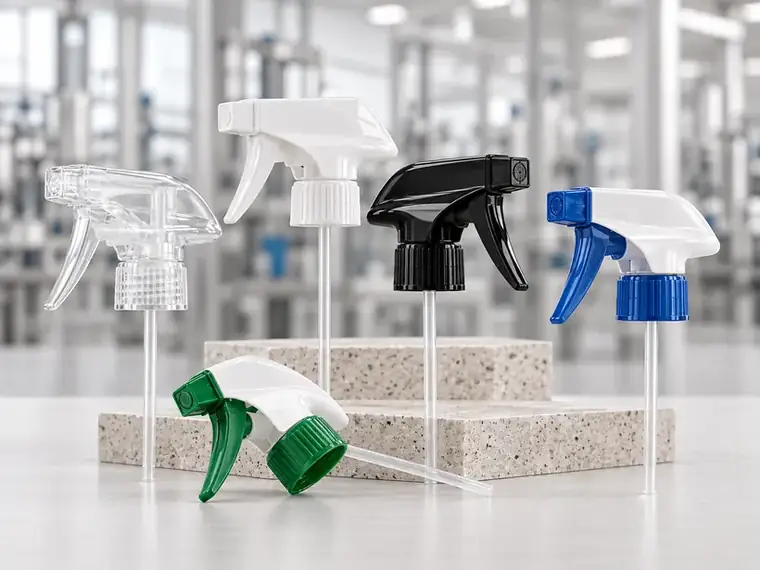
| 01 | Caps & plugs | Screw caps, dispensing caps (flip-top, disc-top, push-pull), assorted caps, tamper-evident bands. Opening torque and neck sealing are checked. |
| 02 | Handles | Clip-on handles for bottles and jerrycans, fitted by hand or in line, sized to the container neck. |
| 03 | Cups | Thin-wall injected cups for serving and portioning. Moulds with high-performance cooling shorten the cycle and hold ovality in tolerance. |
| 04 | Cutlery | Single-use cutlery, in high-cavitation moulds, where weight stability decides bending strength. |
| 05 | PET preforms | The semi-finished part PET containers are blown from. Making preforms in-house means we control part weight, material distribution and neck finish without depending on an outside supplier. |
Flexible packaging: extrusion and coextrusion
Film is produced by blown film extrusion: the molten polymer is pushed through an annular die, comes out as a tube and is inflated with air into a bubble, cooled, then flattened between nip rolls. The blow-up ratio (BUR) and the haul-off speed decide molecular orientation, that is, tear resistance in both directions.
Coextruders and mono extruders
| Qty | Line | What it does |
|---|---|---|
| 2 | ABA coextruders | Three layers, two materials: A skins in virgin material, a B core in recyclate or an additive blend. The ABA structure is what lets us put a lot of recycled content into a film without losing surface appearance and tear strength. |
| 1 | AB coextruder | Two different layers, for example an opaque outer face and a technical inner one, or a sealing layer separate from the strength layer. We use it for films with asymmetric requirements, such as courier mailers. |
| 8 | Mono-layer extruders | Single-layer film in LDPE, rLDPE or a biodegradable compound. It covers most of the sack and pouch production and works on gauges from 6 to 150 microns. |
Every extruder has gravimetric dosing. We extrude tube, half-tube (tube slit on one side) and flat film, in widths up to 12 metres laid flat and gauges from 6 to 150 microns. Capacity in flexible packaging exceeds 620 tonnes a month.
Converting: 13 bag-making lines
The film reel becomes a product on the bag-making lines. We have 13 bag-making machines, each configured for a product family: bottom or side seal, gussets, drawstring, adhesive, handle die-cutting, perforation, counting and packing, as many operations as possible in the same pass.
What comes off the 13 lines
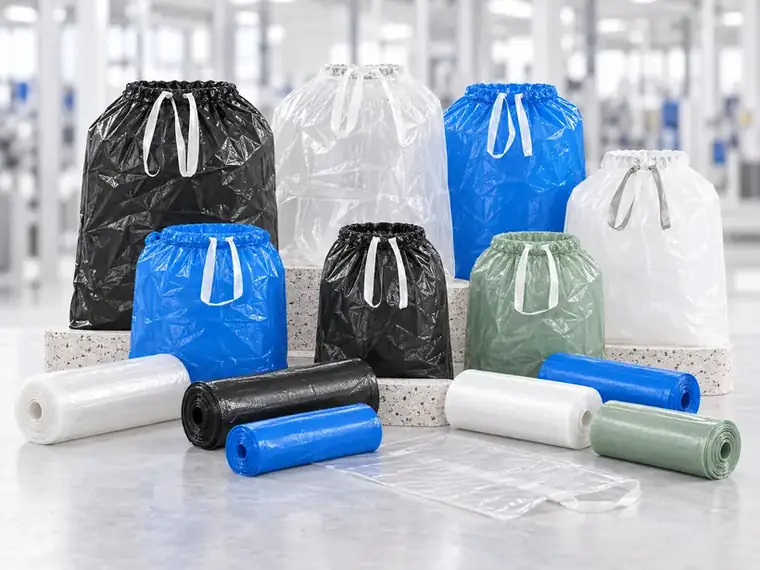
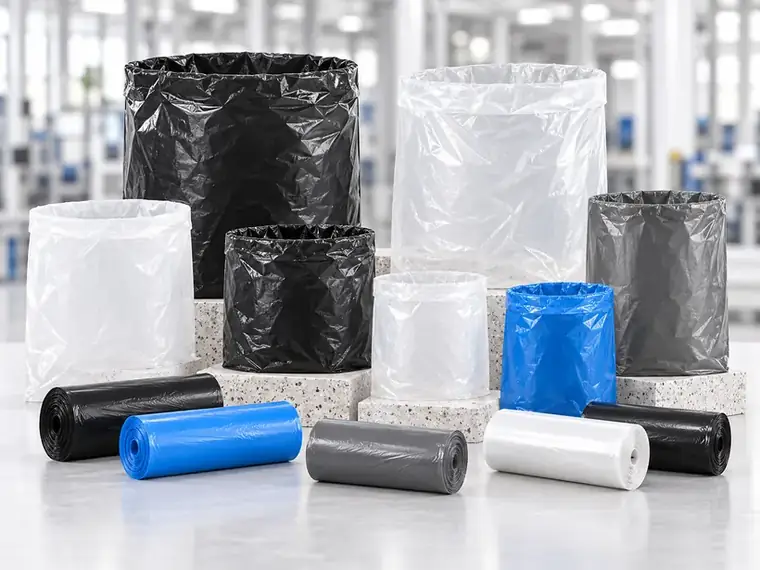
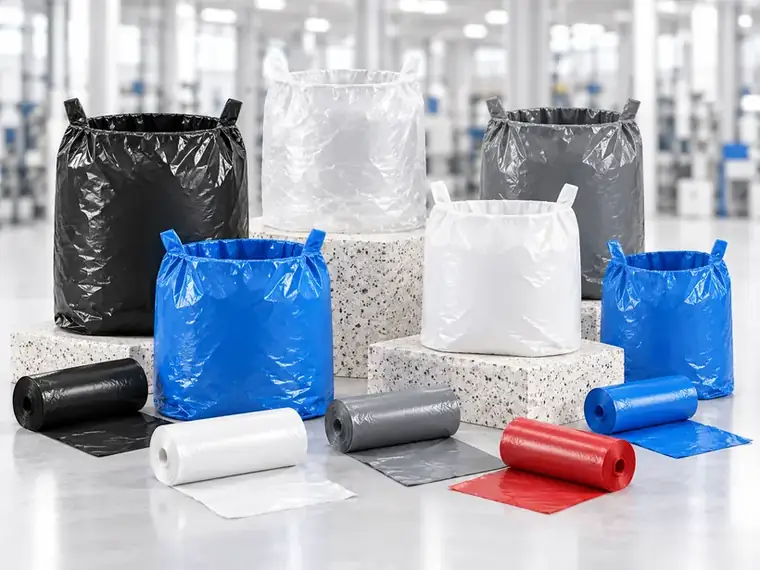
Drawstring bin bags
The drawstring is inserted into the top hem on the bag-making machine itself, in a single pass: the film is folded, the hem is sealed, the cord is fed in and the pull slots are punched. We check pull-out strength, because that is where a bin bag fails, not in the body.
Plain bin bags
Bottom seal, cut to length, packed on roll or in a box. This is the product we make in the largest quantity from rLDPE: at 60, 120 and 240 litres, recycled material is not the cheap option, it is the technically correct one.
Handle-tie bin bags
The handle is die-cut in line, from the same film body. Less added material, the same closing function.
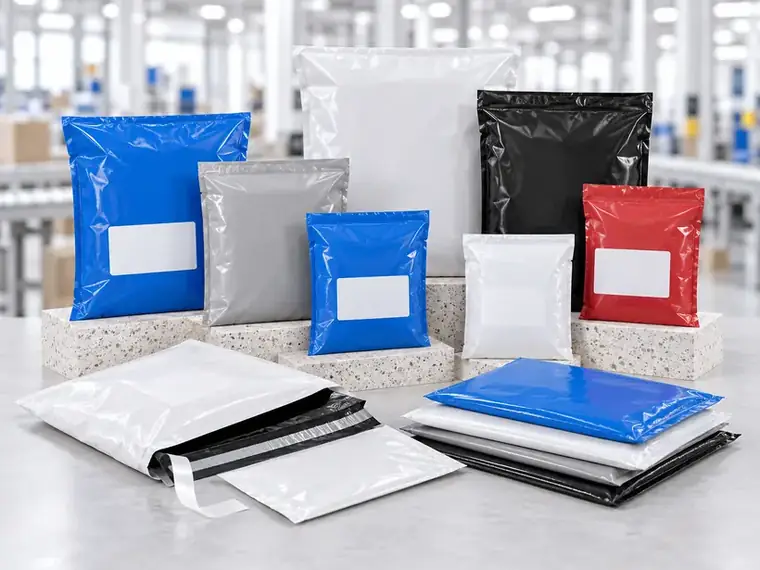
Self-seal courier mailers
Opaque coextruded film, with a permanent adhesive strip applied in line and a silicone liner. Sealed on three sides, the flap is perforated and the mailers are counted into boxes. 13 standard sizes, flexo printable in 1–4 colours.
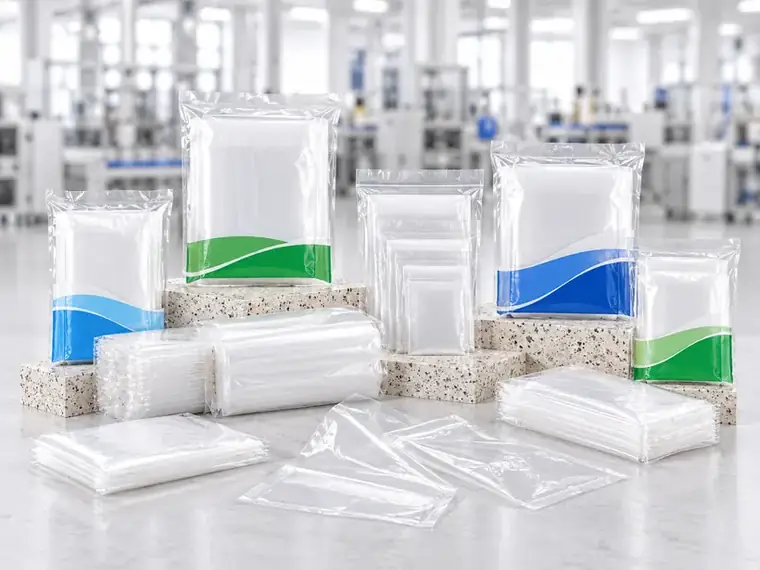
Food bags in sets
Virgin food-grade LDPE, bottom seal, packed 50 pcs/set and 10 sets/case. Raw material and ink meet food-contact requirements.
Produce bags on roll
Roll with perforation between bags, for the produce aisle. Also available in the EN 13432 biodegradable version, from the NOT PLASTIC range.
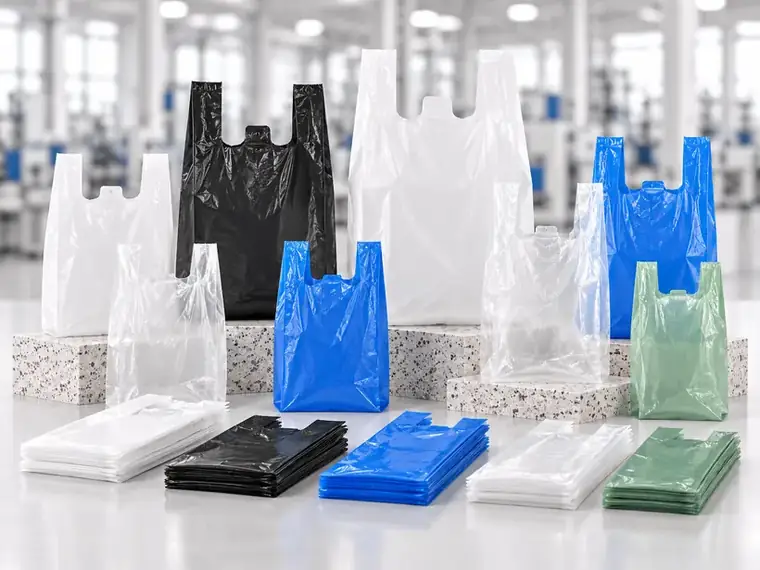
Carrier bags
Vest and banana types, in virgin, recycled or biodegradable LDPE. Handle die-cutting, bottom seal and bottom gusset are done on the same machine; 30,000 pieces fit on a pallet.
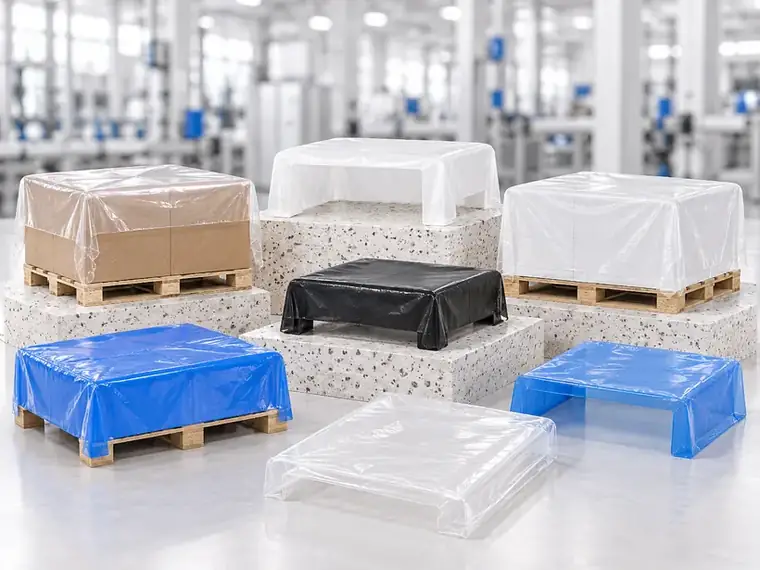
Pallet top hoods
Tubular film sealed at one end, cut to pallet height. It goes over the load in seconds and protects against dust and moisture in the warehouse.
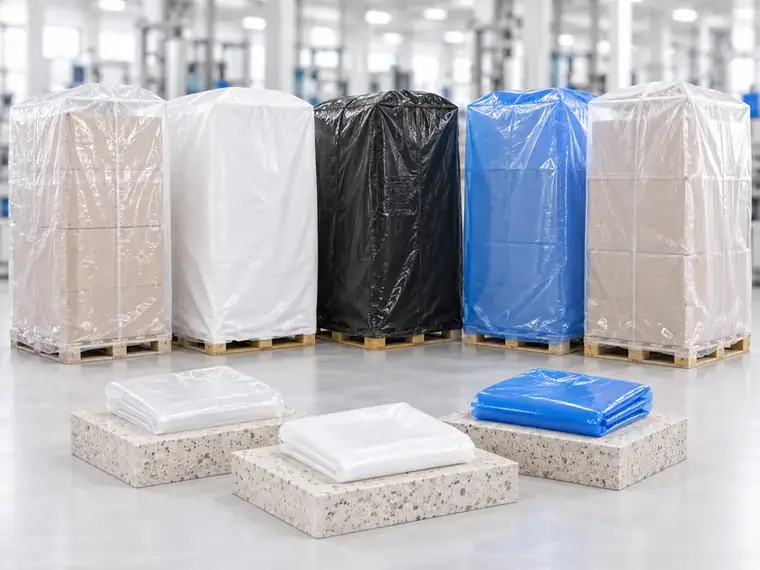
Full pallet covers
The cover encloses the whole pallet down to the base. Converted from wide tubular film and supplied on roll or by the piece, to the customer's pallet size.
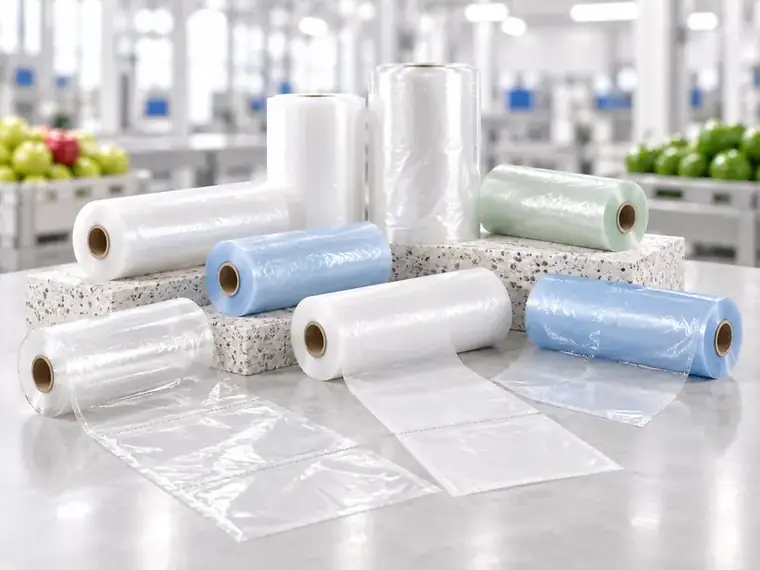
Shrink film
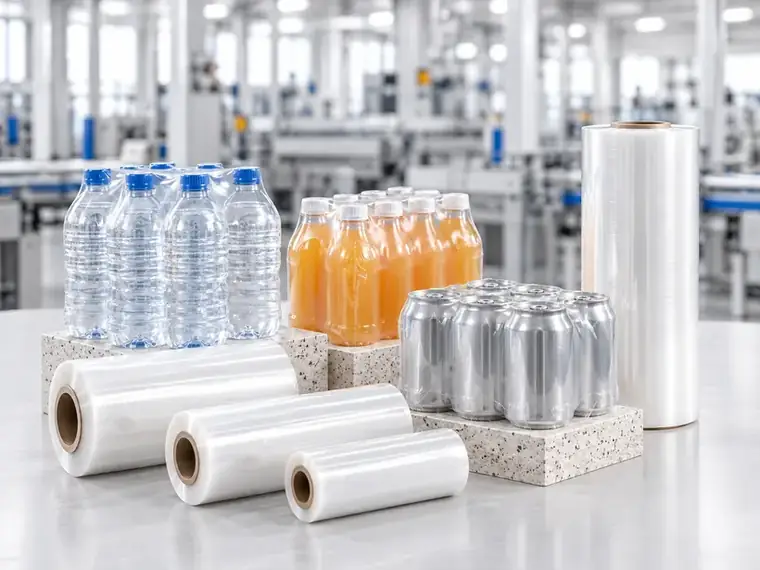
The product we entered flexible packaging with, in 2007. It shrinks in a controlled way over a case, a pallet or a product group and locks the load without a box.
Technical film
Tube, half-tube (tube slit on one side) or flat film, at the required width and gauge, with or without corona treatment for printing. This is where every application without a catalogue product lands.
Construction & covering film
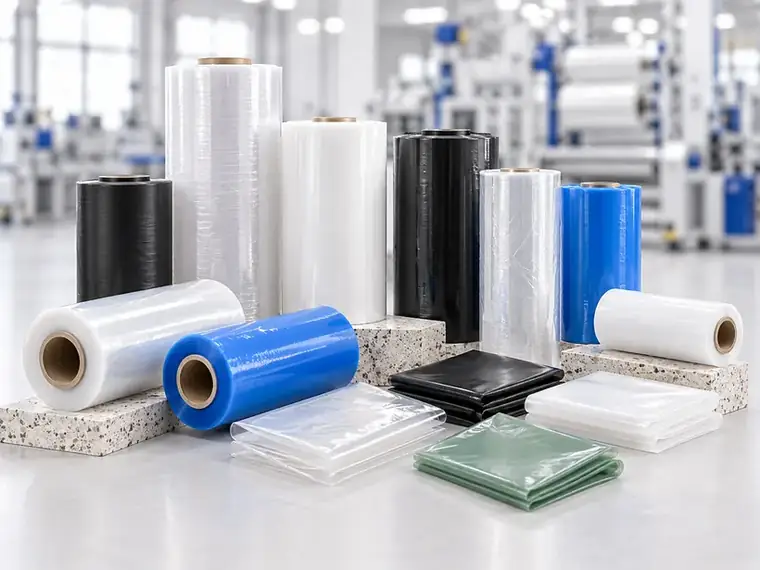
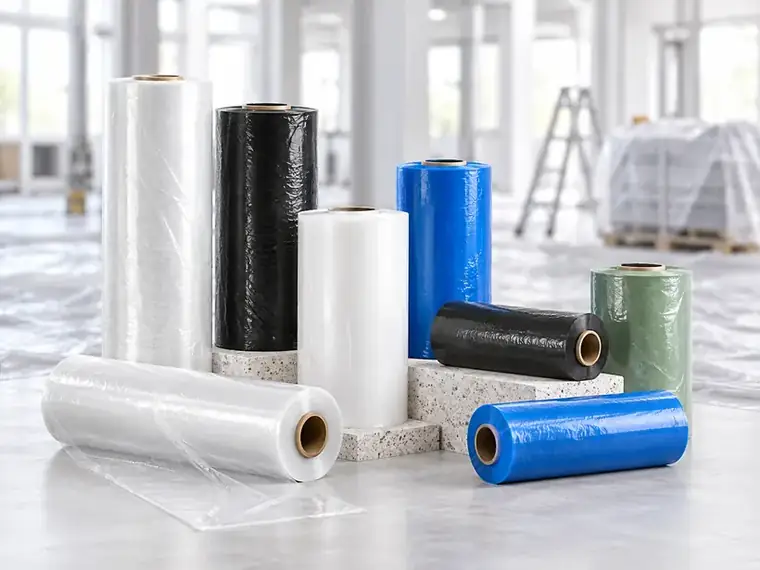
Mini-rolls or core rolls in rLDPE, for painting, site protection and refurbishment. Extruded in an ABA structure, with a recycled core and virgin skins, to keep the look and the tear resistance.
Stretch film
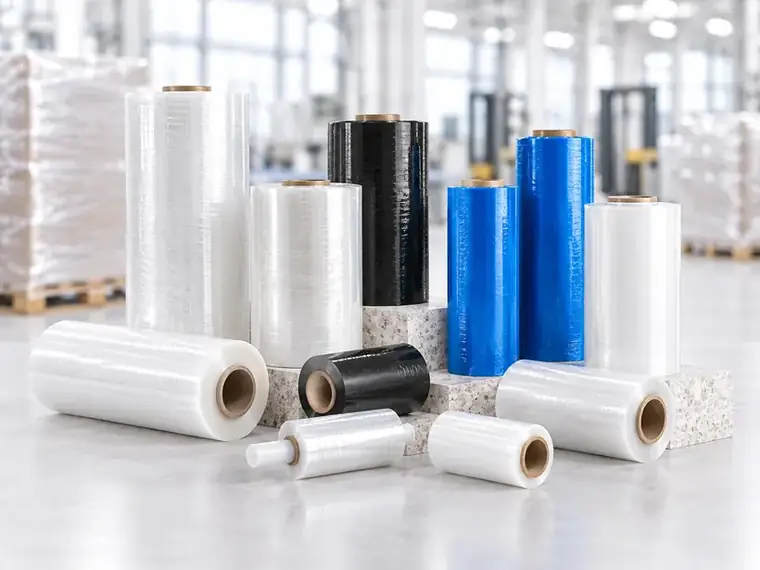
Clear, black or white, for hand and machine wrapping. What matters here is pre-stretch and holding force, not gauge on its own.
Decoration: sleeve labels and flexo printing
On rigid packs we apply slim sleeve labels: the printed sleeve is positioned on the container and heat-shrunk onto its shape, covering 360°. A sleeve follows tapers and profiles a self-adhesive label cannot, and, if the sleeve material is chosen correctly, leaves the container as a single material at recycling.
On flexibles we print flexo, 1–4 colours, directly on the film, before converting. We also produce the printing plates. On courier mailers and carrier bags, print is usually the pack's only branding element.
Quality control and traceability
| Stage | What we check | Where |
|---|---|---|
| 01 | Raw material: batch, certificate, moisture | Goods-in |
| 02 | The blend: weighed ratios, recycled content | Gravimetric doser |
| 03 | The part: weight, dimensions, thread profile, opening torque | First-off and per shift |
| 04 | The container: leak tightness, wall thickness, clarity | In line |
| 05 | The film: gauge, tear strength, seal strength | On the reel |
| 06 | The converted pack: dimensions, seal, piece count | Before packing |
| 07 | The batch: identification on the pallet and in the delivery documents | Dispatch |
For food-contact products we work with compliant raw materials and inks, with per-batch compliance documentation.
Logistics & delivery
Goods leave Focșani on our own fleet. What does not fit a scheduled run goes through the pallet network. From one pallet, delivery is free, across all film and sack ranges. For customers with steady consumption we hold dedicated stock and deliver on a call-off schedule.